
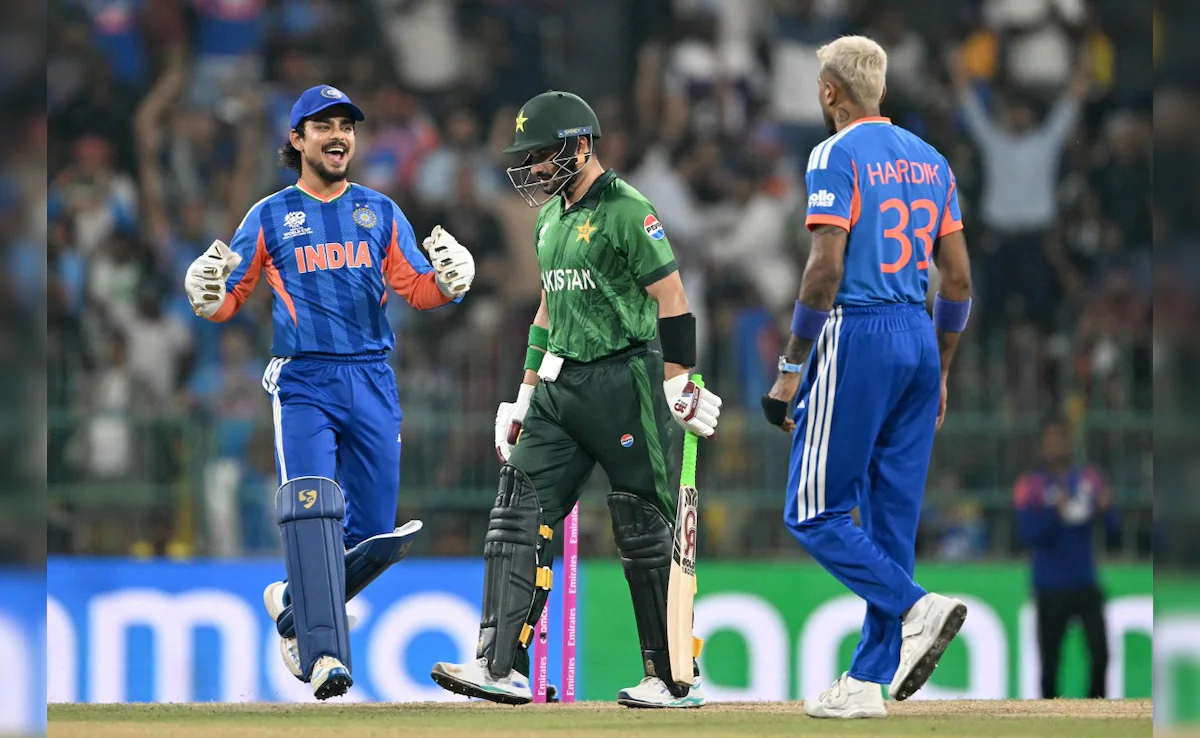
In a crucial group-stage encounter of the ICC Men’s T20 World Cup, the India national cricket team delivered a commanding all-round performance, defeating the Pakistan national cricket team by 61 runs.
India posted a strong total of 175/6 in 20 overs, while Pakistan’s chase faltered badly, bowled out for 114 in 16.2 overs, never truly threatening the target.
India Build a Competitive Total
After being asked to bat first, India approached the innings with calculated aggression. Early overs were steady rather than explosive, but the momentum shifted dramatically during the middle phase.
The standout contribution came from Ishan Kishan, who played a decisive knock of 77 runs off 40 balls, combining controlled aggression with smart strike rotation. His innings included timely boundaries that prevented Pakistan from building pressure.
India’s batters capitalised on loose deliveries and maintained a healthy scoring rate, especially between overs 7 and 15, where the game tilted firmly in their favour. Late cameos ensured India finished with a total well above par on a surface that gradually slowed down.
Pakistan’s Bowling Struggles to Contain the Flow
Pakistan entered the match relying heavily on its pace attack to make early inroads, but the plan did not materialise.
Shaheen Shah Afridi, usually Pakistan’s strike weapon in high-voltage matches, was unable to generate the same menace with the new ball. India’s batters negotiated his opening spell confidently, denying Pakistan the early breakthrough they desperately needed.
The bowling unit lacked consistency in line and length, allowing India to keep the scoreboard ticking. Without sustained pressure, Pakistan’s field placements became defensive, enabling India to dictate terms.
A Chase That Collapsed Too Soon
Chasing 176 required a composed start, but Pakistan’s batting unravelled almost immediately. Early wickets put the side on the back foot, forcing the middle order into a rebuild that never truly gained traction.
Captain Salman Ali Agha had opted to chase, backing his batting lineup to handle the conditions, but the decision backfired as the pitch became harder to bat on under lights.
Frequent dismissals and a lack of meaningful partnerships meant the required run rate climbed rapidly. Pakistan struggled to rotate strike, and the pressure resulted in risky strokes that further accelerated the collapse.
Middle-Overs Control Made the Difference
The contrast between the two sides was most visible in the middle overs.
India maximised this phase with disciplined batting and clever bowling changes, while Pakistan lost control, both while defending and chasing.
India’s bowlers applied relentless pressure, targeting the stumps and varying pace effectively. Pakistan’s batters, unable to settle, found themselves caught between attack and survival, leading to indecision and dismissals.

