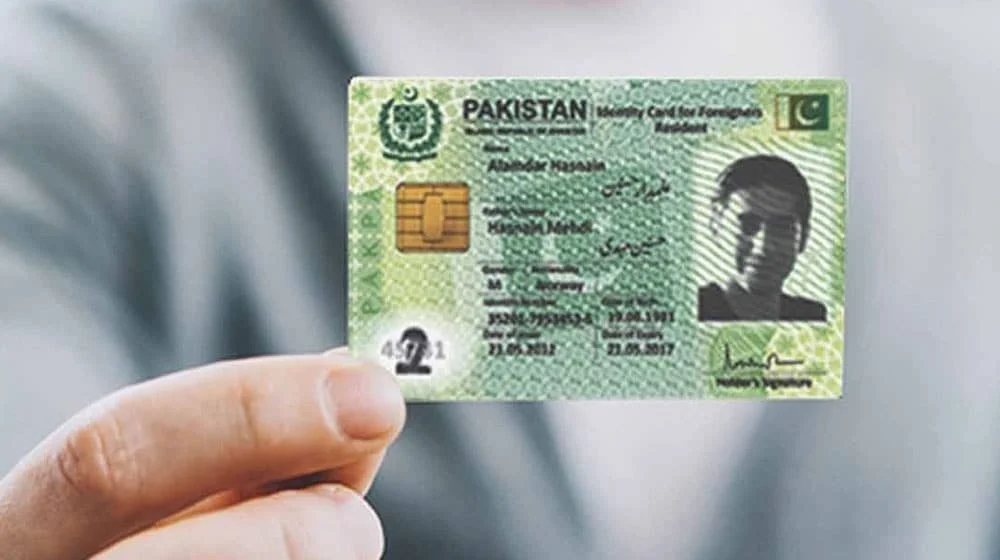
The Government of Pakistan has formally amended the National Identity Card Rules, 2002, and Pakistan Origin Card Rules through official notifications issued in February 2026 to modernise the national identification framework.
These reforms are part of a broader effort to strengthen identity security, improve service delivery, and align Pakistan’s documentation system with digital governance requirements.
QR Codes Introduced as a Core Security Feature
A key change is the statutory introduction of QR codes on CNICs, now legally recognised as a secure, machine-readable verification tool capable of storing encoded identity data.
Once scanned, the QR code can instantly retrieve and validate identity information, enabling quick authentication in both online and offline environments.
Authorities say this creates a robust legal foundation for fast and secure verification across public and private services.
Flexible Technology
The updated rules authorise the use of QR codes or “any other technological feature” instead of relying solely on microchip-based cards.
This gives NADRA flexibility to adopt future technologies without repeatedly changing regulations and allows citizens to carry a standardised card rather than separate chip and non-chip versions.
Boost to Pakistan’s Digital ID Ecosystem
The QR-enabled CNIC strengthens Pakistan’s Digital ID infrastructure and supports interoperability through the National Data Exchange Layer, allowing institutions to verify credentials quickly and securely.
The system is expected to:
- Improve speed and transparency in identity verification
- Reduce manual processing
- Lower risks of fraud and impersonation
Stronger Biometric Verification
The amendments formally expand biometric authentication by explicitly recognising fingerprints and iris scans as part of a multi-modal verification framework.
Read Also: WhatsApp to Introduce Custom Audience Lists for Status Privacy
This enhances identity assurance and aligns Pakistan’s system with modern global security standards.
Immediate Suspension Controls
Under the new rules, if a CNIC is suspended, all associated verification and authentication services are automatically blocked, preventing the card from being used digitally or institutionally.
This closes a major loophole that previously allowed suspended credentials to remain usable in some systems.
Lifetime CNIC Validity for Senior Citizens
In a citizen-friendly move, individuals aged 60 and above will receive CNICs with lifetime validity and a distinct senior-citizen logo, eliminating repeated renewals.
This measure significantly reduces administrative burden and improves convenience for elderly Pakistanis.
Standardised Formats for Multiple Citizen Categories
The government has also updated card formats to cover:
- Overseas Pakistanis
- Persons with disabilities
- Organ donors
- Child registration certificates
- Residents of Azad Jammu & Kashmir (with specific identification wording)
These redesigned formats integrate QR-based layouts and enhanced security features across all identity categories.
Secure Digital Governance
Overall, the reforms modernise Pakistan’s identity document architecture, enabling secure digital verification, improving institutional coordination, and preparing the country for future e-governance initiatives.
Key Highlights at a Glance
- QR codes added as an official verification feature on CNICs.
- The technology framework allows future upgrades beyond microchips.
- Biometric verification expanded to fingerprints and iris scans.
- Suspended CNICs will immediately lose authentication access.
- Citizens aged 60+ to receive lifetime-valid CNICs.
- Updated card formats were introduced for multiple demographic categories.
Conclusion
NADRA’s latest CNIC reforms mark a major transition from traditional identity documentation to a digitally integrated, secure, and future-ready system. By embedding QR verification, strengthening biometrics, and simplifying processes for citizens, Pakistan is taking a significant step toward modern digital identity management and improved public service delivery.