
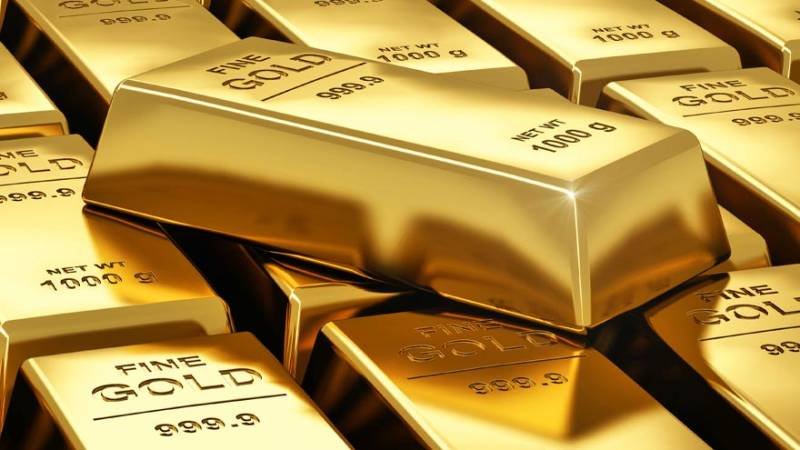
Gold prices jumped sharply on Monday, tracking a strong recovery in international bullion markets after the United States and Iran agreed to pause hostilities. The rally pushed 24-carat gold up by Rs4,000 in a single session, marking one of the sharpest daily gains in recent weeks.
For anyone holding gold as an investment, or planning to buy it for a wedding or festival season, the jump is a reminder of how closely local prices track global cues. A single geopolitical headline was enough to move markets within hours.
Here’s a full breakdown of what happened, why it happened, and what it could mean going forward.
What Happened?
According to the All-Pakistan Gems and Jewellers Sarafa Association, the price of 24-carat gold rose by Rs4,000 to settle at Rs431,736 per tola on Monday. Ten-gram gold closed at Rs370,144, a gain of Rs3,430. On Saturday, the per-tola rate had closed at Rs427,736, after a far more modest rise of just Rs300. Silver also moved higher, though the gain was much smaller. It rose by Rs100 to close at Rs6,397 per tola.
Key Details
The rally in local prices mirrored gains in the global market. Spot gold advanced 0.9% to $4,090.79 per ounce by 12:35 pm EDT (1635 GMT). US gold futures for August delivery climbed 0.5% to $4,093, per Reuters data. A few factors lined up at once to support the move:
- Easing Middle East tensions: A pause in fighting between the US and Iran removed some near-term uncertainty from markets.
- Weaker US dollar: The dollar index eased 0.1%, making dollar-priced bullion more affordable for buyers using other currencies.
- Falling oil prices: Brent crude dropped more than 8% to a one-week low following the ceasefire news, easing inflation worries ahead of the US Federal Reserve’s rate decision later in the week.
The Pakistani rupee stayed nearly flat, closing at 277.86 against the US dollar, up marginally from 277.87 on Friday.
Read Also: Musk’s $1.5M SEC Settlement Approved Despite Judge’s Concerns
Why It Matters
Gold tends to rise when investors are nervous and fall when they feel confident, since it’s traditionally seen as a safe-haven asset. What’s interesting here is that gold climbed even as the geopolitical risk eased. The bigger driver was oil.
Lower crude prices reduce the risk of imported inflation, which in turn raises expectations that central banks like the Federal Reserve could ease monetary policy sooner. That combination, a softer dollar and lower yield expectations, tends to make gold more attractive, regardless of whether the immediate news is “good” or “bad” for global stability.
Official Statements
Bullion traders quoted by local reports said Monday’s gains were driven almost entirely by the international price recovery, not by a shift in domestic buying activity. In other words, this wasn’t a local demand story. It was a direct pass-through of global bullion trends into the domestic market.
Industry Impact
For jewellers and bullion traders, sudden price jumps like this can be a double-edged sword. Higher prices can boost the value of existing gold stock, but they also tend to cool walk-in retail demand in the short term, since buyers often wait for prices to stabilize before making purchases.
For investors, the move reinforces gold’s role as a hedge, but also its volatility. A single weekend of geopolitical news was enough to add thousands of rupees to the price per tola.
What’s Next
Markets are now watching two things closely: any further developments in the US-Iran situation, and the outcome of this week’s Federal Reserve meeting. US monetary policy signals or Middle East escalation could swiftly drive sharp shifts in gold and silver prices once again.
Local prices will mirror global trends, with major moves determined in New York and London, not Karachi, upcoming sessions.

