

Pakistan’s national ID card just got a major upgrade. NADRA has started rolling out a new Computerised National Identity Card (CNIC) that swaps the old microchip for a secure QR code. The change kicked off on August 14, 2026, and it’s meant to make identity verification faster, cheaper, and less dependent on imported technology.
If you’re due for a CNIC renewal or just curious what’s changing on your ID card, here’s everything you need to know.
NADRA Replaces the Microchip With a QR Code
The National Database and Registration Authority (NADRA) has begun issuing a new chipless CNIC that uses a machine-readable QR code instead of the traditional embedded microchip. The rollout started on Pakistan’s Independence Day, August 14, 2026, and is currently replacing the older chipless Teslin-based identity card.
The federal government approved the change through amendments to the National Identity Card Rules, 2002, and the Pakistan Origin Card Rules, 2002, notified on February 24, 2026. According to NADRA, those amendments legally define the QR code as a secure feature that can stand in for the microchip, which also gives the authority room to adopt newer verification technologies in the future without needing fresh legislation every time.
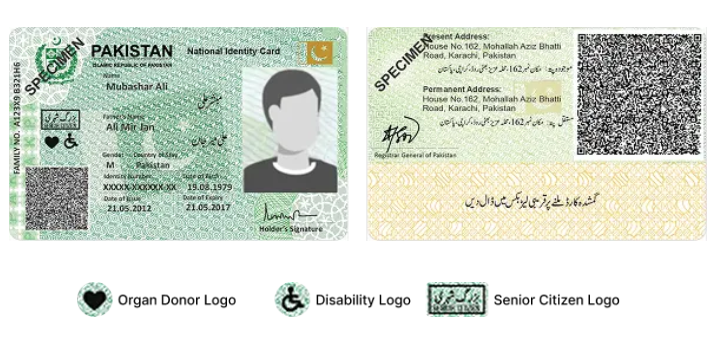
What’s Different About the New Card
No more imported chips. The old Smart CNIC relied on a microchip sourced from abroad. The new card removes that dependency entirely, replacing it with a QR code that can be scanned and verified using an ordinary smartphone.
Made entirely in Pakistan. The card is manufactured domestically by the National Security Printing Company (NSPC) in Karachi, using polycarbonate material. NADRA is framing this as a step toward self-reliance in identity-document technology.
Verified through the PakID app. Citizens, banks, telecom operators, hospitals, Pakistan Railways, and police departments will be able to scan the QR code using the official PakID mobile app to instantly confirm a cardholder’s identity, without needing specialised chip-reading hardware.
Rollout timeline. The QR-based card is currently replacing the chipless Teslin CNIC. From January 2027, NADRA plans to extend the same QR system to the National Identity Card for Overseas Pakistanis (NICOP) and the Juvenile Card. The Pakistan Origin Card (POC) will move to the format in a later phase.
What stays the same. The redesigned card keeps the family number field and continues to carry symbols identifying persons with disabilities, senior citizens, organ donors, and citizens of Azad Jammu and Kashmir. Names and addresses still appear in both Urdu and English.
Why This Upgrade Matters
Verification speed has long been a pain point for banks, telecom operators, and government offices that rely on chip readers to confirm a person’s identity. Chip readers are expensive, need regular maintenance, and aren’t always available at every service point.
A QR code changes that equation. Any smartphone with the PakID app can scan it, which means front-line staff at a bank branch, a SIM shop, or a hospital counter can confirm someone’s identity attributes almost instantly, while back-end systems cross-check authenticity through NADRA’s data exchange network. NADRA says this should cut down on manual processing, reduce fraud risk, and lower data-entry errors around names and addresses.
There’s also a cost angle. Ditching the imported microchip reduces NADRA’s reliance on foreign suppliers and should bring down production costs for the cards over time.
Read Also: PUBG Mobile LIGHT Announced: Pre-Registration Starts Aug 25
How the QR Verification Actually Works
Each QR code stores the cardholder’s core identity details and photograph in an encoded, machine-readable format.
When users scan it through the PakID app, the system instantly displays verified information for front-end checks, while NADRA’s back-end systems independently confirm the data’s authenticity and integrity. This two-layer approach keeps the process fast without sacrificing security.
Who’s Getting the New Card, and When
The QR-based CNIC is already being issued as of August 14, 2026, starting with citizens who previously held the chipless Teslin card. If you apply for a new CNIC or renew an existing one, NADRA may issue you the new format based on your application type and processing centre.
NICOP and Juvenile Card holders will see the QR system extended to their documents from January 2027 onward, with the Pakistan Origin Card following in a later phase.
What It Means for Banks and Telecom Operators
Banks, telecom companies, and other regulated sectors that use NADRA’s Verisys system for identity checks will receive updated software to read and verify the new QR-based cards. This should simplify onboarding processes like opening a bank account or activating a new SIM, since staff won’t need dedicated chip-reading terminals to confirm a customer’s identity.
The Bigger Picture
This is one of the biggest changes to Pakistan’s national ID system in years. Moving away from an imported microchip to a QR code that any smartphone can read is a practical fix for a real bottleneck: faster verification, lower costs, and one standardised card format for everyone. The bigger test will be how smoothly banks, telecom operators, and government offices actually implement the new scanning process once the rollout reaches full scale.